KEY DATA - FAIRTRADE FLOWERS
Would you like to learn how many producer organizations are involved in Fairtrade Flowers? Or how many workers and farmers you can find per country? Visit our dedicated page with statistics on our Top 7 product dashboard
Often the go-to gift to brighten someone’s day, flowers are universally admired for their beauty. Flowers are also a huge industry, with production in places as diverse as Ecuador, Kenya, the Netherlands, and Sri Lanka.
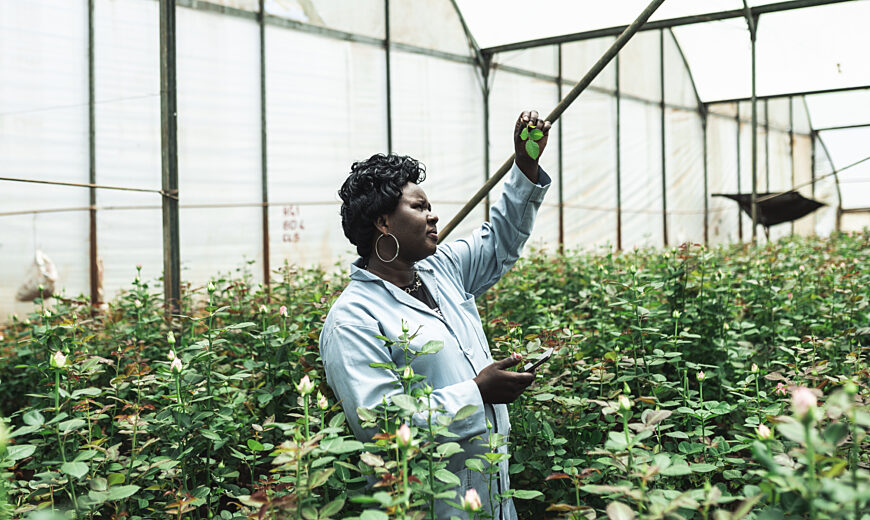
Fairtrade began certifying flowers in 2001, and they’ve grown into one of the most prominent Fairtrade products.
Most flowers and plants are grown on large estates. As a result, they are among the only Fairtrade products to be exclusively sourced from plantations with hired workers, rather than small-scale farms. Fairtrade’s Hired Labour Standard establishes criteria that aim to improve working conditions on plantations and gives workers a stronger voice with plantation management.
Since 2014, Fairtrade also certifies plants from propagation farms. On these farms, Fairtrade workers cultivate mother plants and harvest cuttings from them. These young plants can then be sold to Fairtrade certified traders, who continue growing them in plant nurseries and market gardens that are located closer to consumer markets.
Fairtrade flowers grow in naturally heated and lit greenhouses due to the abundant heat and sunlight in the source countries. This results in these flowers having a lighter carbon footprint on average than those grown under artificial heat and light in temperate countries, even when factoring in transport.
Fairtrade empowers flower workers in a number of ways:
Would you like to learn how many producer organizations are involved in Fairtrade Flowers? Or how many workers and farmers you can find per country? Visit our dedicated page with statistics on our Top 7 product dashboard
You buy flowers and plants as a symbol of life and love. Why not choose flowers that also aim to improve the livelihoods of the people behind the bouquet?
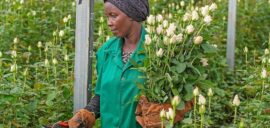
Fairtrade roses from Kenya have a smaller environmental footprint when compared to roses produced in Holland, even when factoring in transport to Europe, according to a recently ...
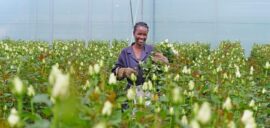
Fairtrade flowers workers in East Africa experience higher wages, better working conditions, and greater engagement in workers’ rights issues and gender equity than their ...
As 2023 gets underway, it is time to focus on the road ahead. We have an ambitious strategy to guide us through to shape a world which is fairer for people and the planet.